





Stormwater drainage Brisbane
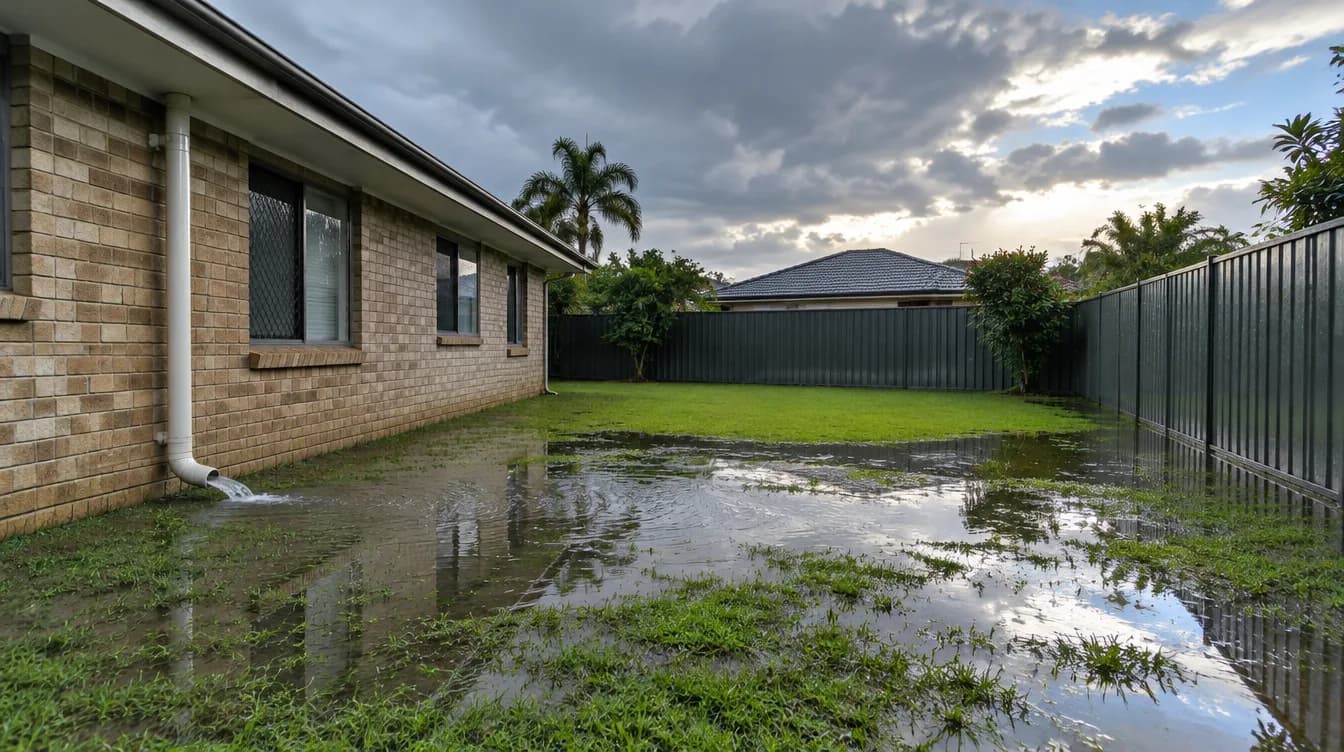
When it rains, the water should leave your yard.
Brisbane storms drop a lot of rain fast. If your yard turns to swamp, water pools against the house or a pit overflows, we'll find out why and fix it: clearing, repairs or new drainage.
The short version
- 1Blocked stormwater drains cleared and camera-checked
- 2Pits, French drains, channel drains and downpipes installed
- 3Price agreed before any work starts
Why you need an effective stormwater system
Water that stays does damage.
A stormwater system's job is to move roof and yard water to the legal discharge point, usually the street kerb or a council drain. When it can't, three things suffer.
Your foundations
Water sitting against the house softens the soil underneath. On Brisbane's reactive clay, that can lead to movement and cracking.
Under the house and garage
Pooled water finds its way under floors, into garages and against walls, bringing damp, mould and damage to what's stored there.
Your yard
Runoff strips topsoil, drowns plants and leaves a lawn that never dries out. Paths and patios get slippery too.
Common signs of stormwater problems
Not enough drainage, or a blocked line?
Tick what you notice after rain. The answer points to the fix: new drainage, or clearing what's already there.
Your result
Tick what happens when it rains
Pick everything you've noticed. We'll show what it usually points to.
A guide only. We confirm the cause on site before recommending anything.
Our stormwater drainage solutions
Pits, French drains, channel drains: which one fits?
Most yards need a combination. Here's what each one does and where it earns its place.
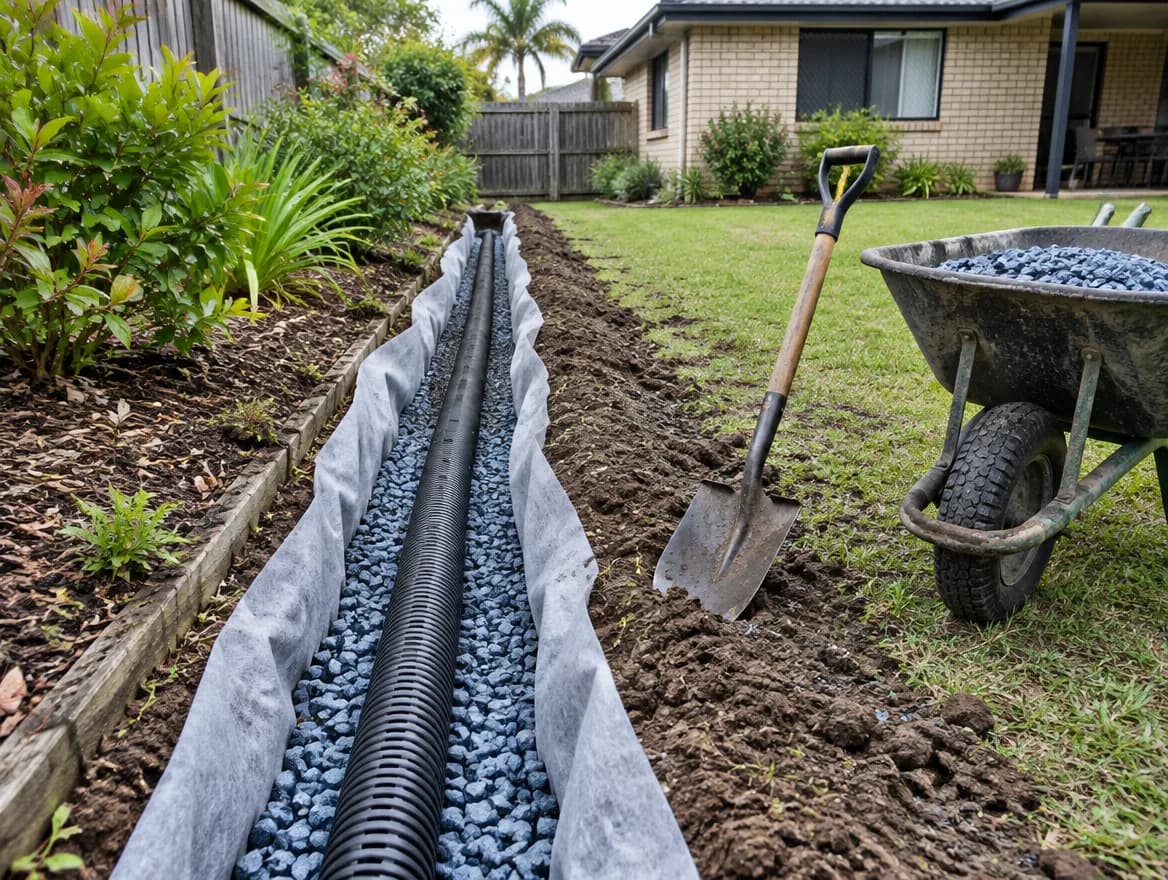
Soggy lawns and garden beds
French drains
A trench lined with fabric, filled with gravel and a slotted pipe. Water soaks down through the soil, into the pipe and away. Shallow versions dry out lawns; deeper ones protect foundations and retaining walls from water pressure.
Good to know
French drains catch water below the surface. They're hidden once the lawn or garden goes back over the top.
Yard turning to swamp every storm?
Send us a photo or describe where the water sits. We'll suggest what's likely needed and arrange a visit to confirm.
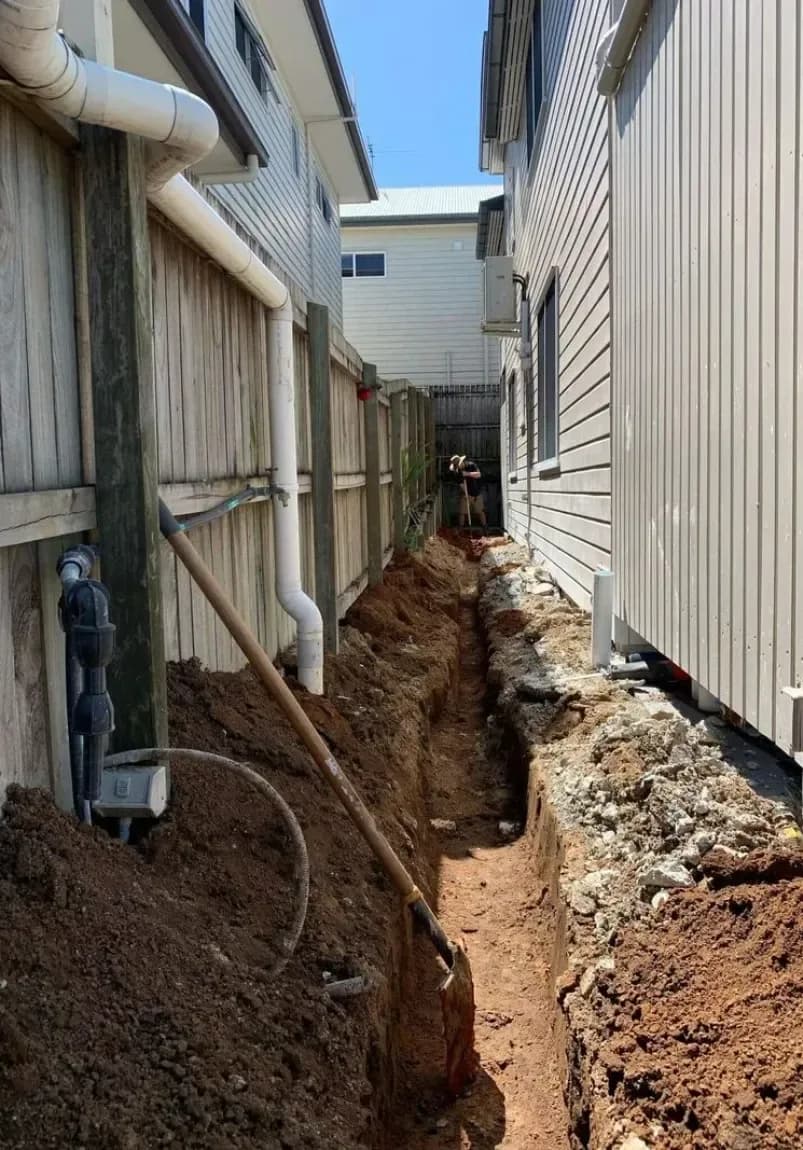
Blocked stormwater drain clearing and repairs
Blocked or broken lines, found with a camera.
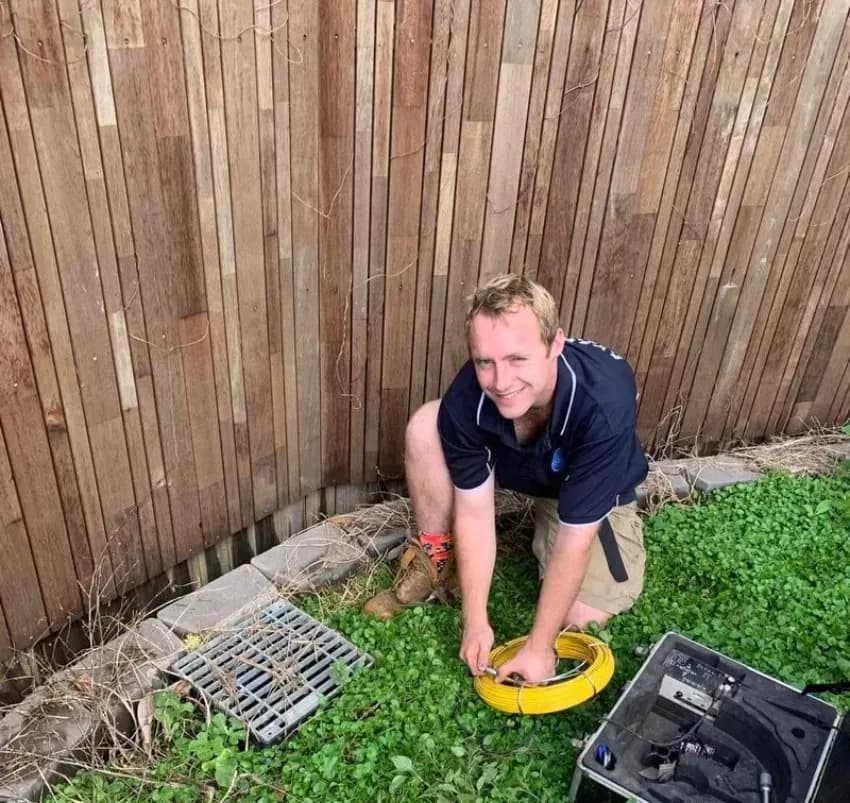
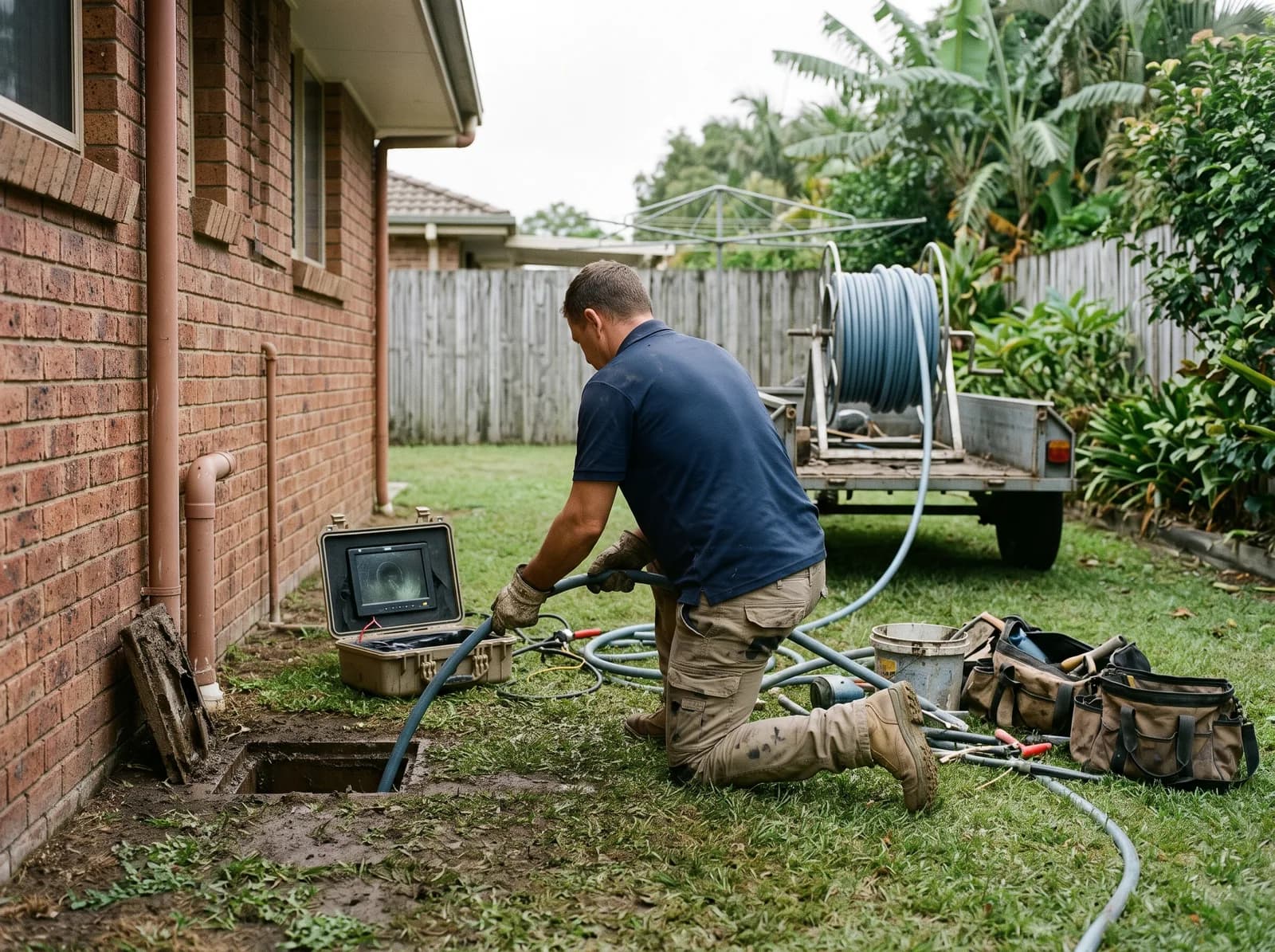
Storms wash leaves, mud and silt into pits and pipes until they choke. We clear blocked stormwater drains with high-pressure jetting, then run a drain camera through to make sure the water can get all the way out.
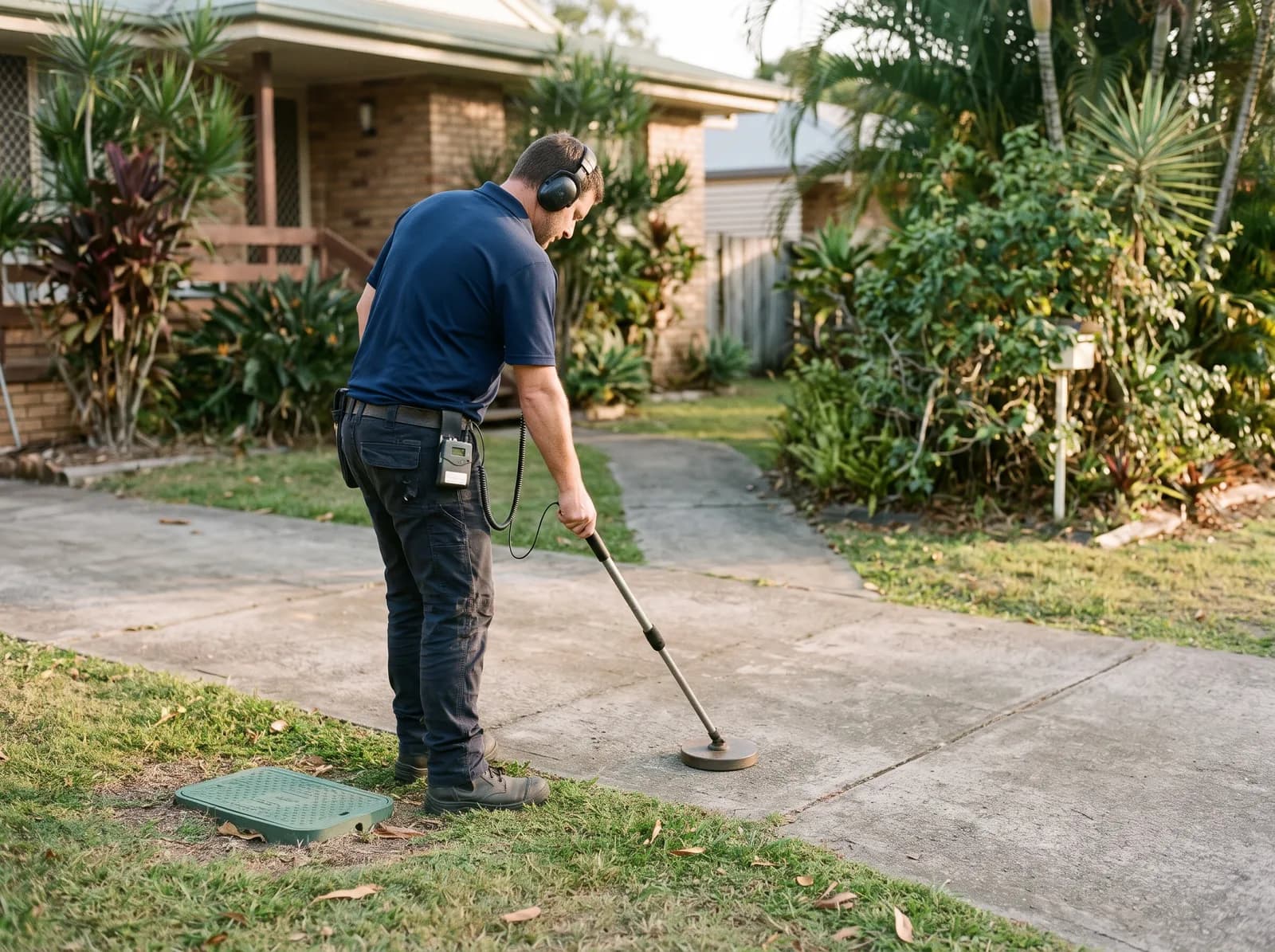
Stormwater pipes also crack and shift: tree roots, ground movement and cars driving over shallow lines are the usual causes. The camera and a pipe locator show exactly where the damage is, so we only open up what we need to.
Then we fix it the way that suits the pipe, from replacing a short section to re-laying the run.
- Blocked pits, downpipes and yard drains cleared
- Cracked, crushed and root-damaged pipes repaired
- Broken pit lids, rusted grates and undersized pits replaced
- Kerb outlets cleared and reconnected
Stormwater drain and pit installation
Plan where the water goes, then give it a path.
Whether it's one pit, a French drain or a whole new system for a build or renovation, the steps are the same.
Step 01
See where the water goes
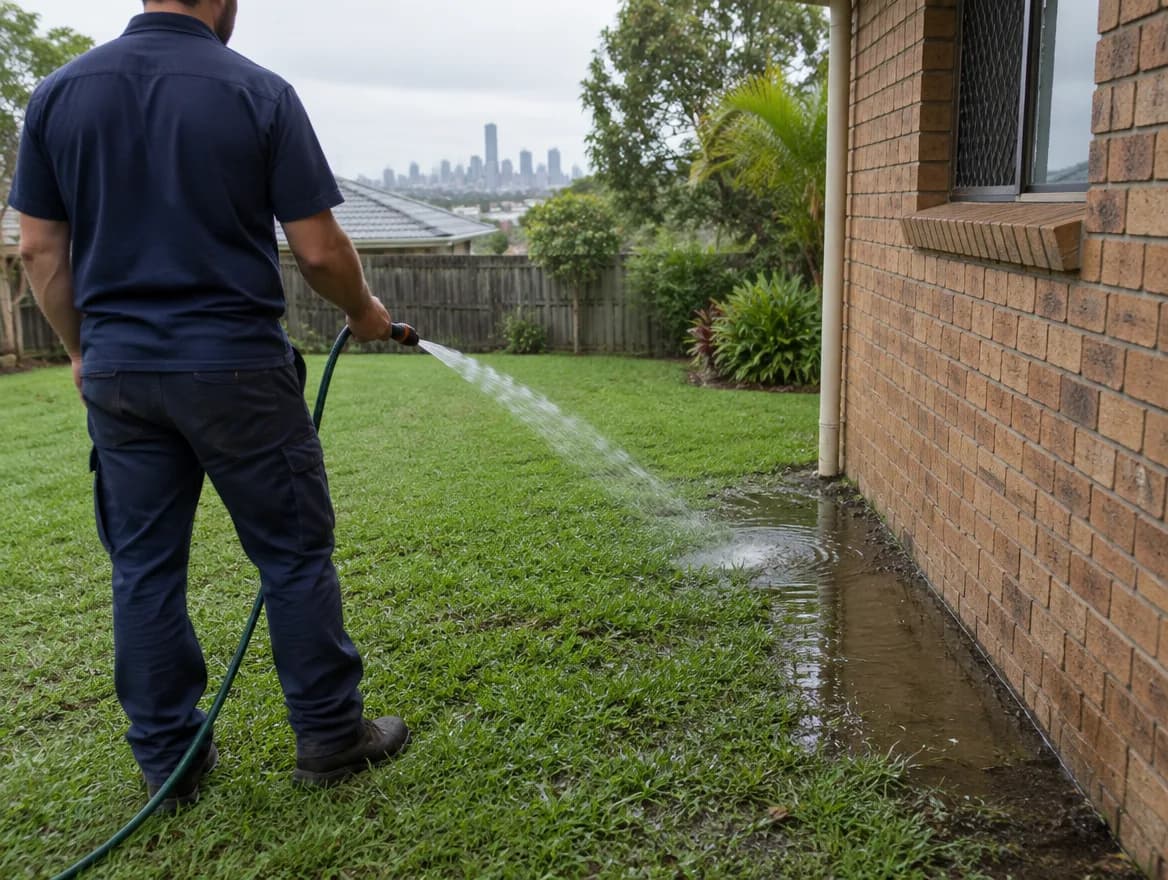
We look at the slope of your block, the soil, your downpipes and where water collects, and run a hose if it isn't raining. Then we plan what goes where, and where it legally discharges.
Step 02
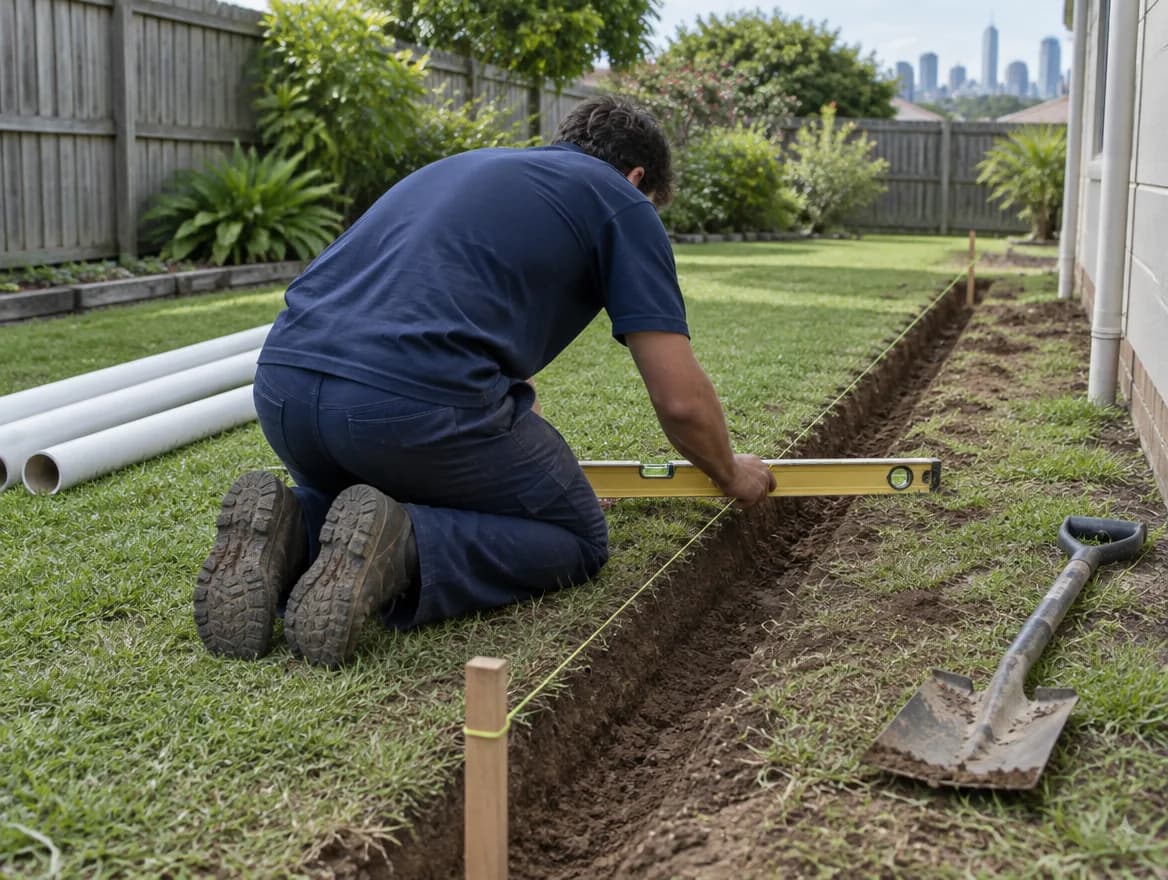
Dig, set the fall, lay it
Trenches are dug and the fall checked along the full length so water keeps moving. Pits are set just below ground level, and pipes are laid, joined and connected to your stormwater line.
Step 03
Test it and tidy up
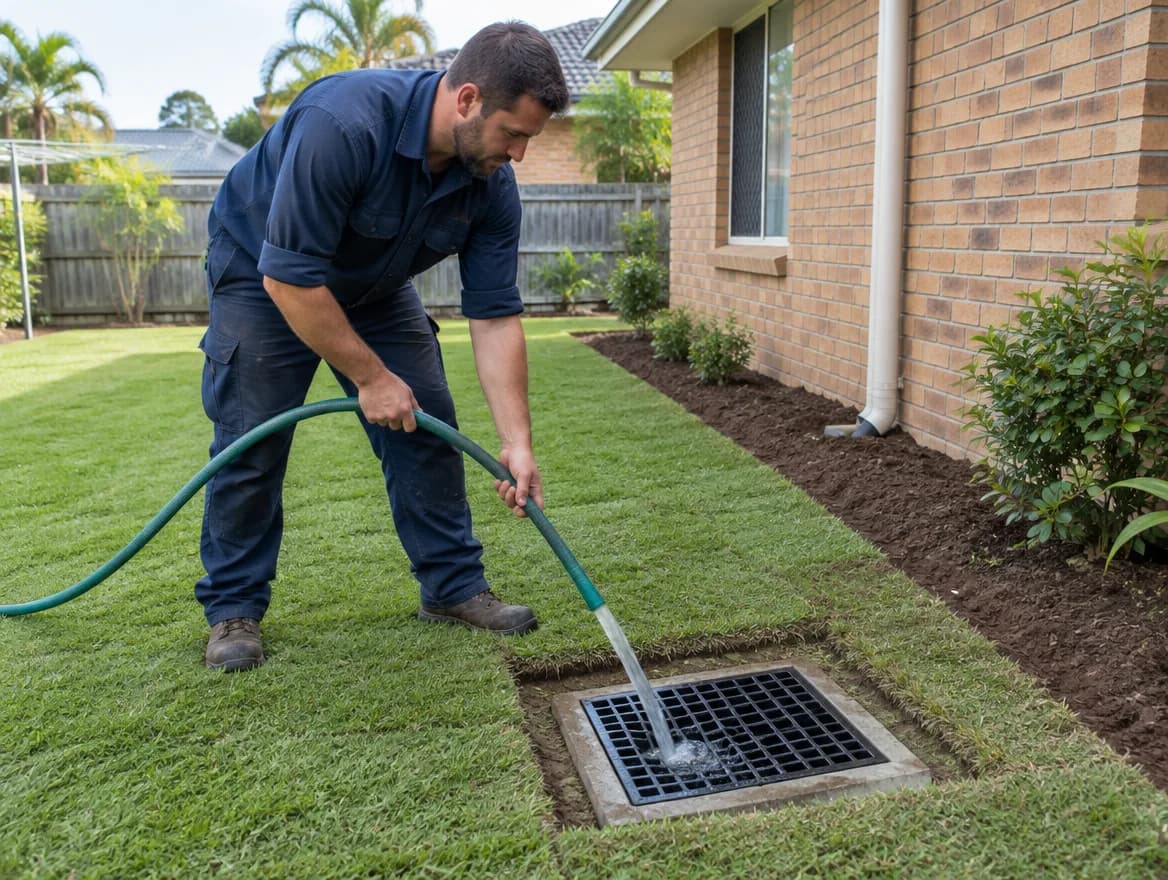
We run water through every new pit and drain to prove it flows freely and empties fast, with no leaks or pooling, then backfill and leave the yard tidy.
All work is done to Queensland plumbing and drainage requirements by licensed plumbers.
Do stormwater pits prevent flooding?
A pit helps a lot. The whole system is what protects your home.
A well-placed pit gives runoff somewhere to go, but it can only drain as fast as the pipe and outlet behind it. If that connection is blocked or too small, water backs up. We look at the whole path from roof to kerb, and no drainage can promise a property will never flood in an extreme storm.
Stormwater drainage maintenance
A check before storm season saves a soggy summer.
French drains, pits and channel drains are low maintenance, not no maintenance. A routine service covers:

Pits cleaned out
Leaves, silt and debris removed before they wash into the pipes.
Grates and lids checked
Cracked, rusted or loose grates and lids replaced.
Channel drains flushed
Grates lifted and channels cleared along their full length.
Downpipes and connections tested
Every downpipe confirmed connected and flowing.
Roots and damage spotted early
A camera run where a line is slow, so roots are dealt with before they block it.
Flow tested to the kerb
Water run through the system to make sure it leaves the property.
Upfront and honest pricing
Every yard is different. Your price is agreed first.
- 01
Clearing or new drainage
Unblocking an existing line is a smaller job than installing a new system.
- 02
Length and depth of the run
A short French drain along a garden bed is less work than a run across the whole yard.
- 03
What's in the way
Concrete, paving, retaining walls and tight side access all take extra time.
- 04
Pits, grates and materials
Size, number and type of pits, and the grates that suit where they sit.
- 05
Where it can discharge
The distance to the kerb or a legal connection point, and its condition.
The price before the shovel
We look at the site, explain what we recommend and why, and give you the price before any work goes ahead.
- First-visit fix rate
- 9/10
- jobs fixed first visit
- Workmanship guarantee
- 12mths
- workmanship guarantee
Stormwater FAQ
Stormwater and yard drainage questions.
Can't see yours? Our friendly team is happy to help.
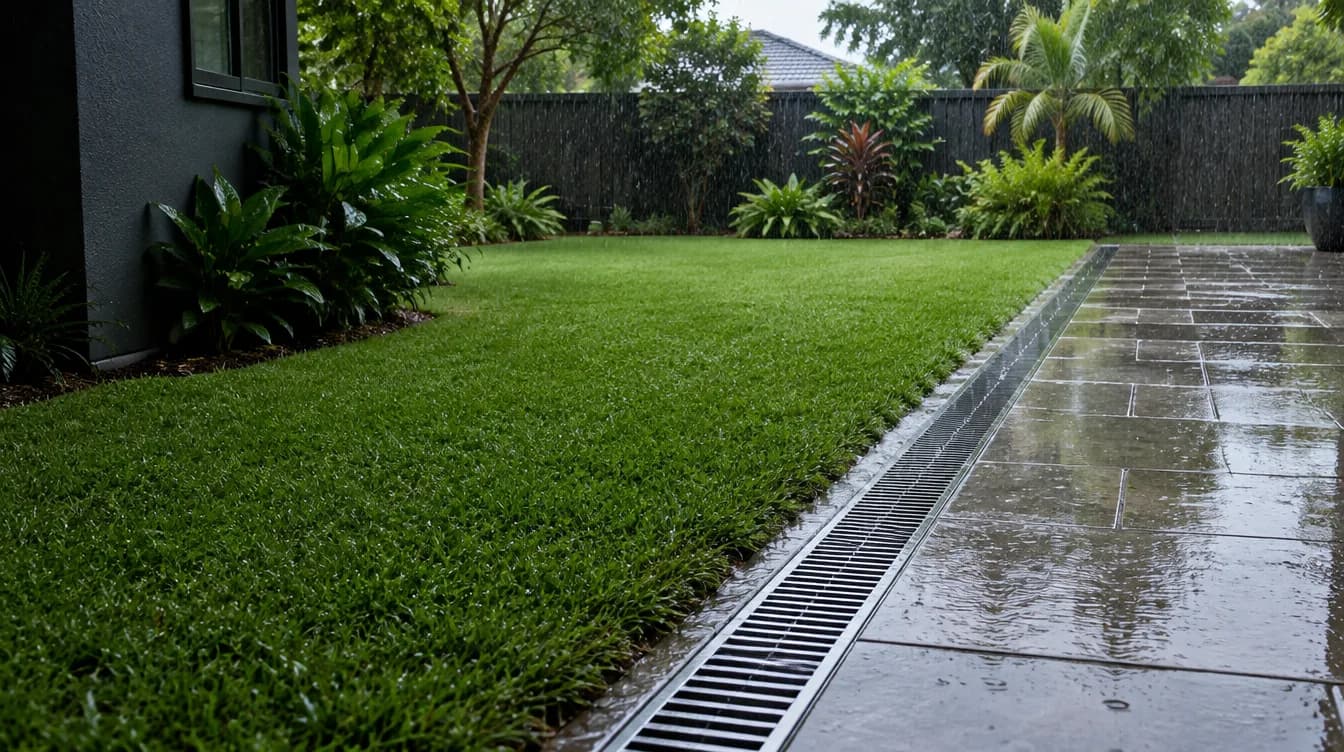
A French drain is buried: a gravel-filled trench with a slotted pipe that collects water soaking through the soil. A trench drain, also called a channel drain, sits at the surface with a grate on top and catches water running across paving, driveways and pool surrounds.
Downpipes overflowing at the base, pits that fill and don't empty, water bubbling out of the ground near a downpipe, or little water coming out at the kerb during rain are the usual signs.
Generally the stormwater pipes, pits and downpipes on your property are the owner's responsibility, up to the kerb outlet or connection point. Street drains and council stormwater are the council's. If you're unsure, your local council can confirm.
No. In Queensland, stormwater must not be connected to the sewer. Roof and yard water goes to the stormwater system, and sewer gullies shouldn't be used to drain rain.
Often, yes. A pit, French drain or channel drain on your side can catch runoff and carry it to your stormwater line. We'll look at where the water enters and suggest what will work.
Yes. We install stormwater drains, pits and downpipe connections for new homes, extensions and landscaping projects across Brisbane, Moreton Bay, Logan and Redlands.
Once a year, before storm season, suits most homes. Yards with lots of trees, or pits that collect a lot of silt, may need more frequent cleaning.
More Blocked Drains services
Problems that aren't stormwater
Stormwater drainage in Brisbane
Keep the rain moving away from your home.
Tell us what happens in your yard when it rains. We'll suggest the fix that suits your block and price it before anything is dug.